
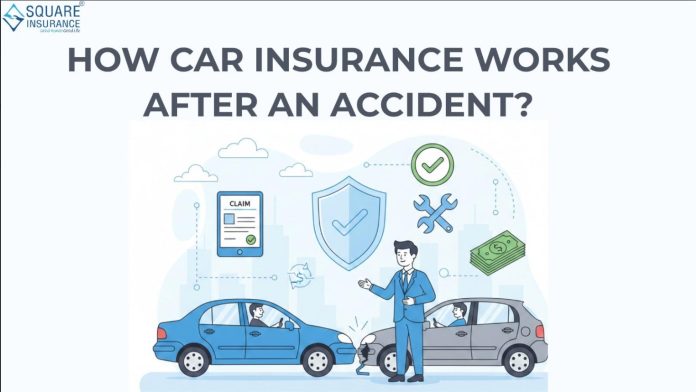
Road accidents are not only chaotic but disturbing too. With extra precaution on the road and suitable car insurance, you can make this whole accident experience hassle-free.
However, many car owners are unsure about how a car works after an accident. From informing the insurer to getting the car inspected and repaired, the process follows certain steps. But it is very important to understand the claim settlement process to avoid inconvenience after any mishaps.
In this guide, we will explain the functioning of car insurance after an accident.
What to Do Immediately After a Car Accident?
An accident can be stressful, but staying calm and acting quickly can make a big difference. Here are the important steps to follow:
- Ensure Safety First: Check yourself and others for injuries. If possible, move the car to a safe spot and switch on the hazard lights.
- Seek Medical Help: Call for medical assistance immediately if anyone is injured.
- Inform the Police (If Required): In case of major damage, injury, or third-party involvement, file an FIR or inform the local police.
- Inform Your Insurance Company: Report the accident to your insurer as soon as possible through their helpline, app, or website.
- Collect Evidence: Take clear photos of the damage, accident location, number plates, and surroundings. Note down details of the other vehicle and driver.
- Do Not Admit Fault: Avoid admitting liability at the accident spot. Let the insurer and authorities assess the situation.
- Wait for Inspection: Do not start major repairs until the insurance surveyor inspects the vehicle, unless the insurer permits it.
Types of Car Insurance Claims After an Accident
Here are the two different types of car insurance claims after an accident:
Cashless Claim:
When you repair your car at the insurance company’s network garage, the insurer directly pays the approved repair amount to the garage. You only pay the deductible and non-covered charges.
Reimbursement Claim:
When you repair your car at a non-network garage, you pay the full repair bill first and later submit the bills to the insurer to get the approved amount reimbursed as per your policy terms.
How to Inform the Insurance Company After an Accident?
The process may slightly differ depending on whether it is an own damage claim or a third-party claim. Here are the steps explained separately:
Own-Damage Car Insurance Claim
This applies when your car is damaged due to an accident, collision, fire, natural disaster, etc. Here are the steps for an own-damage car insurance claim:
Step 1: Report the accident immediately through the helpline, app, or website. Share policy number, date, time, and location.
Step 2: The insurer registers the claim and gives you a claim reference number.
Step 3: Provide the required documents like RC copy, driving licence, claim form, and accident photos.
Step 4: A surveyor inspects your car to assess the damage and estimate the repair cost. Do not start major repairs before inspection unless approved.
Step 5: Below are the two types of claims available for car claim settlement.
- Cashless Claim: Take the car to a network garage. The insurer pays the approved amount directly to the garage.
- Reimbursement Claim: Repair at any garage, pay the bill, then submit invoices for reimbursement.
Step 6: After verification, the insurer settles the approved claim amount.
This process is usually faster because it mainly involves damage inspection and repair approval.
Third-Party Claim Process
This applies when your car causes injury or damage to someone else. Here are the steps for the third-party claim process for your car insurance:
Step 1: Report the accident and clearly mention that third-party damage or injury is involved.
Step 2: In most third-party cases, filing a police complaint is necessary.
Step 3: The affected third party files a case in the Motor Accident Claims Tribunal (MACT).
Step 4: Your insurer represents you in legal proceedings and evaluates liability.
Step 5: The court decides the compensation amount based on evidence and policy terms.
Step 6: The insurer pays the compensation as directed by the tribunal. Third-party claims usually take longer because they involve legal procedures.
Reasons for Car Insurance Claim Rejection
Here are some of the reasons for car insurance claim rejection:
- Policy expired: Your insurance policy was not active on the date of the accident.
- Drunk driving: The driver was under the influence of alcohol or drugs.
- No valid driving licence: The driver did not have a valid licence at the time of the accident.
- Delay in informing the insurer: You did not report the accident within the required time.
- Wrong information: Incorrect details were given while buying the policy or filing the claim.
- Using a car for commercial purposes: A private car was used for business or hire without proper coverage.
- Regular wear and tear: Damage due to normal aging of the car is not covered.
- Repair before inspection: The car was repaired before the insurance surveyor checked the damage.
Conclusion
Car insurance claims can get rejected if policy rules are not followed. So, always keep your policy active, give correct details, inform the insurer on time, and follow the proper claim process.
Reading your policy carefully and understanding the coverage can help you avoid claim rejection. This will not only help you to stay financially protected during accidents but also legally protected, as well.
FAQs
How Car Insurance Works After an Accident?
After an accident, you must inform your insurer immediately. The company will inspect the damage, approve the repair cost, and settle the claim as per your car insurance policy terms.
Can I buy car insurance after an accident to claim the damage?
No, you must buy car insurance before the accident happens. Insurance does not cover damages that occurred before the policy’s start date.
Is it necessary to inform the insurer of small damages?
Yes, it is always better to inform your car insurance company, even for small damages, to avoid claim rejection later.
Will my premium increase after making a claim?
Yes, your car insurance premium may increase if you make a claim, especially if you lose your No Claim Bonus (NCB).
What documents are required for a car insurance claim?
You usually need a claim form, driving licence, RC copy, policy details, and repair bills, depending on the claim type.